Abhirami Jayakumar
Ph.D. student, Kerala Agricultural University, Thrissur. 2025-.
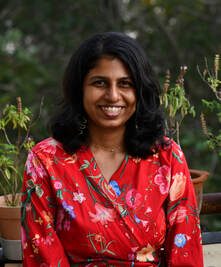
I have always been interested in ecology in general, and anything reptile fascinates me. I work on finding the sex determining mechanisms (SDMs) in a few Indian reptiles which will help in answering broader questions related to evolution of SDMs. Apart from academics, I like keeping myself busy with my varied interests, be it origami, playing badminton, or drowning myself in books. I also love talking to people, a good conversation to me is what coffee is to most people, a Pick-Me-Up.
Meenakshi Poti
Ph.D. student, Vrije Universiteit, Belgium
Navigating environmental change and governance in Indian Ocean small islands, 2025.
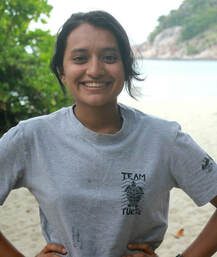
With interests in social ecology, my work focuses on understanding complex relationships between people and nature. I am enthused by island systems because they encapsulate deeply rooted and strongly linked social ecological interactions. For my PhD, I study conflicts between conservation and development in small islands. Much of my research is focused in the Andaman Islands. I am affiliated to the Université Libre de Bruxelles (ULB) and Vrije Universiteit Brussel (VUB) – Belgium and Dakshin Foundation – India.
I completed my Masters with the Erasmus Mundus Joint Master Degree in Tropical Biodiversity and Ecosystems (TROPIMUNDO), conducted in Belgium, Italy and Malaysia. I am passionate about creative science communication and the role of youth in decision making. Before starting my PhD, I worked as a trainee at the European Commission’s Environment department, where I initiated the EU Youth for Biodiversity program, to provide a platform for the youth, at international environmental negotiations. Through my project ‘Storytelling through brushstrokes’, I use art and creative writing to communicate science and policy to a wider audience.
P. Gowri Shankar
Ph.D. student, North Orissa University
A study on population genetics of King Cobra, Ophiophagus hannah (Cantor, 1836: Serpentes: Elaphidae) across Peninsular India, 2023.
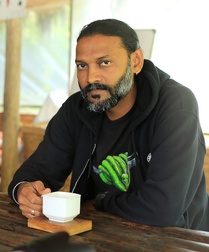
Snakes, especially king cobras have been a passion for as long as I can recall. As a field biologist, I have been studying their natural history both in captivity and in wild for close to two decades. I am currently enrolled as a PhD candidate at the North Orissa University and an affiliate student at Centre for Ecological Sciences, IISc, India. I was part of a student exchange programme at Uppsala University, Sweden (ERASMUS-MUNDUS EMINITE Program-2014-2016)
I am currently examining range-wide phylogeography and contemporary population genetic structure of the king cobra within India and reconstructing the biogeographic history of O. hannah in Southeast Asia. We will test for the presence of evolutionary distinct units (ESU’s) and underlying drivers, for the long-term conservation of king cobras. We plan to use a sampling design that incorporates the geographical and bioclimatic heterogeneity of the Indian subcontinent to collect king cobra samples (non-invasive) and occurrence data across the extant range of the species.
Ashwini V. Mohan
Ph.D., Technische Universitat Braunschweig, Germany.
Diversification on Islands: insights from macro and micro-evolution of Phelsuma day geckos in the Indian Ocean, 2021.
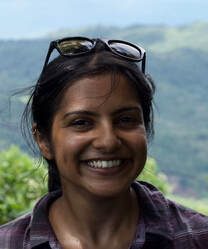
I completed my Masters’ dissertation studying phylogeographic patterns in island populations of the Andaman keelback snake (Xenochrophis tytleri). I then went back to the A&N Islands to study geckos, focussing on their distribution, genetic diversity and population structure. My interests are population genetics of terrestrial island fauna, biogeography and evolutionary mechanisms that create and maintain diversity. I am currently a PhD student at the Vences lab, TU Braunschweig, Germany. My PhD focuses on macroevolutionary patterns, ecological niche and diversification within island lineages of the genus Phelsuma.
Website: ashwinivmohan.weebly.com
Vidyadhar Atkore
Ph.D., Ashoka Trust for Research in Ecology and the Environment, Bangalore, India.
Drivers of fish diversity and turnover across multiple spatial scales: Implications for conservation in the Western Ghats, India, 2018.
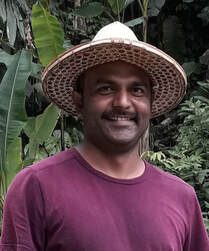
Besides rainforests, freshwater ecosystems fascinate me the most. As a freshwater biologist, I am interested in understanding patterns and processes that influence the organization of fish communities at different scales. My PhD was conducted in the four sub-basins of Bhadra, Tunga, Malaprabha (Karnataka) and Mhadei (Goa). I sampled fishes using non-destructive traditional methods of cast nets (with different mesh size). My results suggested that fish diversity was driven by stream size while at the stream segment level it was determined by habitat type, disturbance level and water chemistry variables My study highlights the importance of free-flowing (undammed rivers) and role of water chemistry variables in maintaining high fish diversity in the central Western Ghats of India.
Subsequently, I conducted Post-doctoral research at ATREE on the impact of hydropower projects on native fish communities and key reproductive guilds in Ranganadi river sub-basin, Arunachal Pradesh. Currently, I am an Aquatic Ecologist at WWF-India, Bangalore office in the ‘River Wetlands and Water Policy’ Division.
Aniruddha Marathe
Ph.D., Ashoka Trust for Research in Ecology and the Environment, Bangalore, India.
Species richness and distribution of ants (Hymenoptera: Formicidae) along an elevational gradient in the Eaglenest Wildlife Sanctuary (Arunachal Pradesh, India), 2018.
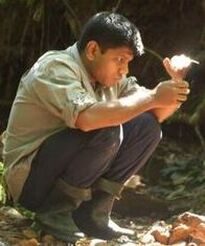
I am interested in geographic gradients in biodiversity and mechanisms that generate these gradients. I am happiest when studying biodiversity patterns of ants, but frogs, trees and birds are also exciting. I followed my first interest during PhD at ATREE and Manipal University, where I worked on ant communities across elevation gradients in the Eastern Himalaya.
Madhuri Ramesh
Ph.D., Ashoka Trust for Research in Ecology and the Environment, Bangalore, India.
Conservation amidst development in a nonequilibrium environment: a study of marine turtles in Odisha, India. 2018.
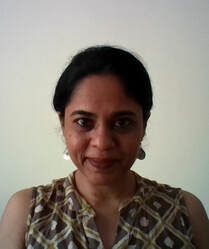
The conservation of olive ridley turtles (Lepidochelys olivacea) began about three decades ago in India – it is one of the first such large-scale programmes in the country and has a long history of power struggles associated with it. My doctoral dissertation focused on how protectionism (a form of conservation governance which focuses on the spatial separation of wildlife from humans) gets framed, practiced and sustained with respect to a mobile species, that too in a densely inhabited landscape.
Nibedita Mukherjee
Ph.D., Vrije Universiteit and Université Libre de Bruxelles, Belgium.
Mangrove Ecosystem Values and Functions, 2014.
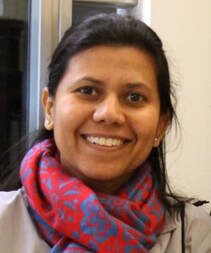
I undertook an interdisciplinary dual PhD on mangroves and I conducted fieldwork on the latitudinal limits of mangroves and (USA and South Africa) and in Sri Lanka. Subsequently, I did a post doc at the University of Cambridge where I collaborated with 10 large international conservation organisations e.g. UNEP-WCMC, Birdlife, IUCN, RSPB, FFI among others. I led diverse expert groups to review top 100 questions of global conservation significance and barriers to evidence use in conservation policy. I drew evidence from the literature in diverse fields such as behavioural economics, experimental economics and social psychology.
Katrina Fernandez
Ph.D., University of Tasmania, Australia.
Invertebrate and mammal biodiversity on some sadas (ferricretes) of the Western Ghats, India, 2012.
My PhD aimed to quantify the invertebrate biodiversity and test the assumptions that invertebrates on the Sada are distinct assemblages from that of the surrounding forest habitat type. My results indicated that seasonality in climate, especially precipitation, is a large scale driving force providing conducive habitats for numerous opportunistic and generalist species to migrate onto the sada from the adjoining forest habitats.