Diksha Dikshit 2025 -
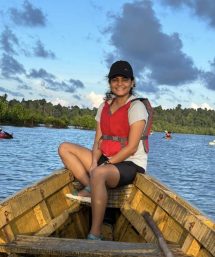
I was introduced to the ocean in the Andaman Islands, where I completed my Master’s in Marine Biology. Coming from a concrete jungle, everything about the islands and the ocean excited me. For my master’s dissertation, I studied the impact of zonation on biodiversity in the intertidal region and later worked on seasonality in macro-zooplankton and Dugong habitat dynamics.
I eventually trained as a Dive Master to spend more time observing coral reefs first-hand. Somewhere between the dives, I discovered my love for teaching and now work as a nature educator, blending science with storytelling. I am also associated with the ReefLog initiative by Dakshin Foundation, building a culture of systematically recording marine biodiversity while scuba diving. Currently, I am obsessed with the behavioural ecology of reef-dwelling animals and coastal socio-ecological systems.
Sharon Pradhan 2025 -
Aparna Haridas 2025 -
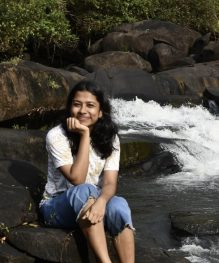
My love for aquatic life started with a tiny ‘guppy pond’ my brother and I built as kids. We dug a hole, filled it with water, and proudly called it ours. That simple beginning led me to a bachelor’s in Aquaculture and a master’s in Marine Biology.My research journey started with my master’s, where I studied harmful algal blooms in the Cochin estuary. Later, as project staff at IISc, I worked in the coastal landscapes of Uttara Kannada, exploring how mangroves and estuaries store and cycle carbon. I also conducted experiments on bioethanol production using cellulose-degrading microbes from various sources.
Currently at Dakshin, I am working on a long-term monitoring of elasmobranchs. Keeping track of their populations, conservation strategies and trying to give these fascinating species a better chance at survival, while also supporting the livelihood of fishers who rely on them. My love for fish doesn’t stop; I enjoy them just as much on a plate. If you don’t spot me at work, I’m probably having a fish meal and F.R.I.E.N.D.S running in the background.
Tejaswi Abhiram 2024 -
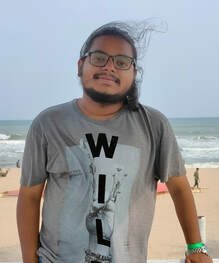
Tejaswi’s passion for the marine environment began during his childhood near Visakhapatnam beach, where he often spotted dolphins. This fascination grew during his time at Rishi Valley School and later during his Master’s studies, where he researched sacred groves in Tamil Nadu and studied the impact of human activities on the environment. Tejaswi’s professional journey began with an internship at the Wildlife Institute of India, where he explored the effects of noise pollution on Gangetic river dolphins. He later worked on a project focusing on shark trade dynamics along India’s east coast. After completing a PADI Rescue Diver certification in the Andamans, Tejaswi returned to the Wildlife Institute to help draft a conservation action plan for Rhinoceros and Barasingha.
Currently, Tejaswi’s work focuses on monitoring elasmobranch populations along India’s East Coast and studying pollutants in these species. His long-term goal is to foster coexistence within marine ecosystems and strengthen the conservation of marine megafauna.When not in the field, Tejaswi enjoys diving, reading, cooking, and exploring diverse cultures through travel & food.
Abisha C 2024 -
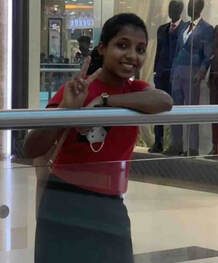
I have loved being outdoors and connecting with nature since I was a child. During my undergrad years, I had the chance to explore the amazing marine ecosystem and its biodiversity, which ignited my passion for it. Over time, I’ve delved into topics like microplastic pollution, marine environments, taxonomy, and fish biology.
For my PhD, I chose to study elasmobranchs along the southwest coast of India. My research focuses on exciting areas like DNA barcoding, population dynamics, and the life history traits of these fascinating species, all to fill scientific gaps in our knowledge. Additionally, I’m keen on understanding the human interaction, attitudes and perceptions of fishers and other stakeholders towards elasmobranch fisheries and conservation. I believe that by working together, we can conserve these incredible apex predators, which are vital for keeping our marine ecosystems healthy. In addition to working in the field and the lab, I enjoy travelling, exploring local food and culture, trekking, listening to music, and reading mystery and sci-fi novels.
Samar Ahmad 2023 -
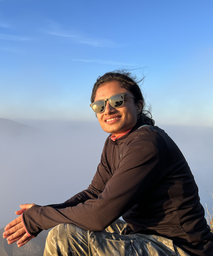
Hailing from the mountains of Nainital, Uttarakhand, my journey into the fascinating world of marine ecosystems began with the simple joy of shore walks along the bustling beaches of Mumbai during my Master’s. During my school years, I actively participated in State and National level swimming championships. Witnessing the vibrant marine life and breath-taking corals beneath the surface during my open water SCUBA diving course, I realized that marine ecology was my true calling. For my Master’s dissertation, I studied the relationship between coral fish abundance and the structural composition of coral reefs in Goa.
I am currently part of the Marine Flagships Programme at Dakshin Foundation, contributing to the ReefLog initiative, a citizen science program engaging SCUBA divers in monitoring marine biodiversity across India. Outside of academia, one would find me soaking up the outdoors. When not exploring the depths of the ocean, you’ll find me embarking on short hikes to observe birds, mountain-biking in the hills, and engaging in high-altitude trekking; I also love savouring new cuisines in different places.
Irfan Ali 2023 -
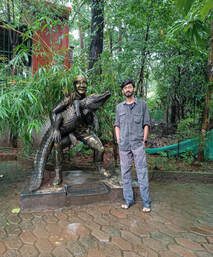
Born and raised in the Andaman Islands, I developed a deep interest in snakes and lizards native to the islands. During my undergraduate studies, he had the opportunity to intern on a seedling monitoring project in Andaman supervised by a Ph.D. student from Columbia University. Following my bachelor’s degree, I pursued a master’s in ecology at Pondicherry University, and then volunteered at the Madras Crocodile Bank. I then interned with the Dakshin Foundation, working on the histology of olive ridley sea turtles, which sparked his interest in marine turtles. Subsequently, I interned in Kartik Shanker’s lab at IISc Bangalore, focusing on the biogeography of semi-aquatic snakes. I then worked as a naturalist at the Satpura Tiger Reserve.
Currently, I am part of the Marine Flagships program with the Dakshin Foundation, serving as a program associate on the leatherback monitoring project in Little Andaman of the Andaman and Nicobar Islands. In my free time, I enjoy creating illustrations, going herping, and wildlife photography.
Rahul Suresh 2023 -
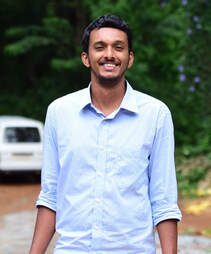
During my middle school, there was a lesson where sea turtles come back to the beach where they were born, to lay their eggs. It sparked my interest towards them which has led me to this project after all these years. During my bachelors, I worked as a volunteer educator in Mysore Zoo and have in various bird surveys in and around Mysore. I have worked on smooth coated otters in Ganapati Lake at Sagara town for my master’s thesis and during my internship, I studied the elusive elephants in Tripura. I have experience in different landscapes and species and each one of them has a place in my heart, but sea turtles have always been special.
I am now working as a Programme Associate at Dakshin on the long term monitoring of olive ridleys in Odisha. At the lab, I am working on the sex ratios of olive ridley hatchlings. Apart from wildlife, I love listening to classical music, trying out different food, exploring local cultures and stories behind them, and binge watching tv shows and anime.
Serfas Khan 2023 -
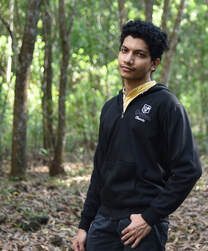
During his BS–MS degree at IISER TVM, Serfas chose to major in biology due to his fascination with the captivating projects and lab courses in ecology. In 2021, he conducted research on color preference, visual proboscis extension response, and communication behavior in various honey bee species at IISER TVM. He also gained valuable experience in managing honeybee colonies. During his minor project in physical science, he worked on the development of a biosensor using aptamers from puffer fishes.
Hailing from the Lakshadweep islands, his deep-rooted connection to the region and its resources, especially fishing, has been a significant part of his life since childhood. The allure of both laboratory and fieldwork led him to join Dakshin Foundation. Currently, he is working on the green turtle monitoring project in the Lakshadweep archipelago with Dakshin Foundation.
Garima Bora 2022 -
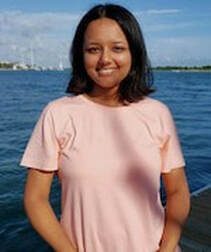
Garima has always felt drawn to the marine ecosystems despite spending her childhood in a landlocked city. The curiosity to explore the oceans led her to spend an undergraduate summer term at the Duke Marine Lab where she was introduced to rocky shores, tidal flats, marshes, mangroves, coral reefs and subtidal areas. There she worked on fiddler crabs, larval recruitment of marine fouling communities, and algal biofuels. Since then, she has worked on smooth-coated otters and migratory waterbirds. The dissertation was her breakthrough into the area of elasmobranch ecology. The study helped to build preliminary data about the diet composition of five shark species at Malvan, Maharashtra. She is interested in studying the behaviour, ecology and conservation of elasmobranch species. Her other interests include observing intertidal organisms, and waterbird ecology.
At Dakshin, she is part of the Marine Flagship programme-Sharks and Rays. The project aims to develop a long-term monitoring protocol at Malvan for the landed sharks and rays species.
Akshta Joshi 2022 -
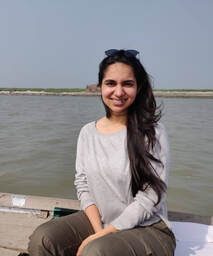
Growing up in different parts of the country, I experienced varied landscapes, climates, flora, and fauna which grew into a strong understanding of nature with an affinity and inclination toward the sea. I am a researcher with an interdisciplinary background. While graduating in commerce, a diving course in the Andamans really opened up my eyes to a career in aquatic biology – and all my experiences during my Master’s in Wildlife Conservation and Action further fuelled my passion to pursue this field.
I’m continuously exploring from an economic valuation perspective how biological systems and conservation research work in today’s world. My interests are broad within the space of aquatic biology, particularly marine systems, climate studies, fisheries, and behavioural ecology. In the lab, I am working on a project on the effects and implications of climate change on the reef ecosystems of the Andaman Islands. Ultimately, I would like to contribute to conservation and outreach through my research. When I’m not in awe of science, I paint, read, play sports and the guitar. Please don’t hesitate to reach out to me about any cool fish you ate/saw/read about.
ALUMNI
Chandana Pusapati 2019 - 2025
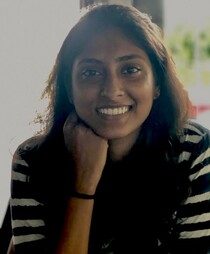
Growing up in the coastal city of Visakhapatnam, I have always been fascinated by the ocean and spent most of my childhood strolling by the beach. After half a decade away, I found an opportunity through my dissertation to return to the coast. While pursuing my masters in Climate Science and Policy at TERI University, I studied the effect of nest temperature on olive ridley hatchling fitness in Rushikulya and Chennai for my thesis, after which I joined Dakshin Foundation. I am currently working on the long-term monitoring project on sea turtles in Rushikulya and am interested in marine ecology, species-ecosystem interaction, and conservation education.
When I am not working or worrying about work, I love to read and too often end up using books as my means of distraction. Other times, I can be found staring at trees or hanging out with my dogs, or heavily indulging in cricket, badminton, and some dark chocolate.
Adhith Swaminathan 2009 - 2024
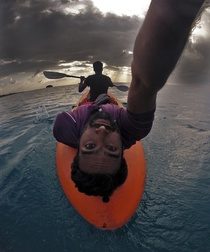
I was introduced to the world of sea turtles at the age of 10 as a volunteer with Students Sea Turtle Conservation Network (SSTCN), Chennai. Since then, I have worked on various research and conservation projects of sea turtles in Costa Rica, China, India and
Sri Lanka. I have been conducting research on leatherback turtles in the Andaman and Nicobar Islands since 2010 as part of Dakshin Foundation’s Flagships programme. The project was initiated in 2008 in Little Andaman Island to monitor the recovery of leatherback nesting post the 2004 Indian Ocean earthquake and tsunami. Over the years, the project has evolved to continue the long-term monitoring of leatherback nesting through a capture-recapture programme, satellite telemetry and through regular surveys of the Nicobar group of Islands.
I work as the base manager of Andaman Nicobar Environment Team (ANET), Dakshin’s multidisciplinary research hub and education centre in the Andaman Islands. I am also one of Trustees of SSTCN.
Hari Prasath 2020 - 2024
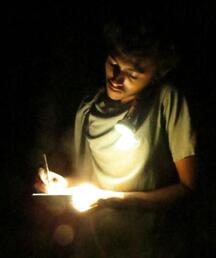
Observing nesting olive ridley turtles in a shoreline dominated by human activities in Chennai played a major role in sparking my interest in ecology and conservation. Driven by my curiosity to understand these charming creatures, I joined Dakshin as an intern post my undergraduate degree in 2016 which later became a Project Assistant position in the Long-term sea turtle monitoring programme at Rushikulya.
After my masters degree from the International Masters in Applied Ecology program, I have joined Dakshin foundation again to study movement patterns and habitat use of green turtles in the Lakshadweep archipelago. Currently, I am interested in studying different kinds of organismal movements and their significance in shaping community structures and ecosystem processes. Apart from research, I love reading science fiction, climbing, binging shows, and daydreaming of my adventures as a space explorer along with my trusty and snarky side-kick spaceship AI, Muttacose.
Jessica Barman 2022 - 2024
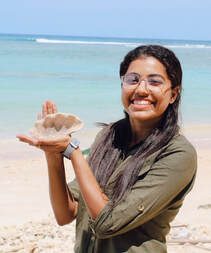
Jessica’s obsession with marine creatures began when she was assigned to give a presentation on Aurelia aurita during her Bachelor’s degree. She fell so in love with these bizarre creatures that after diving deeper into the subject, she found that the ocean was filled with equally bizarre but incredibly magnificent creatures. Brought up in the mountainous state of Assam, she moved to the Andaman Islands to study marine biology from Pondicherry University. During her master’s degree, she worked on a project on microplastic ingestion rates in the seafood of Andaman. Her dissertation was on biofouling rate in both natural and artificial substrata in Andaman waters. After her course, she joined a project in ICAR-CIARI which took her to the remote island of Car Nicobar.
With Dakshin, she is working on her seahorse project in Andaman, funded by The Rufford Foundation, where she will identify the habitats of seahorses through local ecological knowledge and underwater surveys. Apart from that, she will also be working on the long-term monitoring of elasmobranchs on the islands.
Vishrutha Rao 2022 - 2023
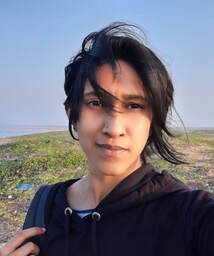
I came to know of marine biology as a child when I wanted to protect dolphins being slaughtered and taken captive. Since then, discoveries of the science behind the various adaptations and cultures of underwater life forms have not ceased to fascinate me. My conviction to study and protect the oceans was furthermore fueled during my Master’s when I understood that life on Earth is dependent on the smooth regulatory function of this dynamic realm. My perception of the oceans expanded from viewing it as habitat containing curious organisms to viewing it an abiotic organism in itself. My interest in cetacean study and conservation lives on and has grown into an aspiration to eventually pursue ecological studies of whales.
I am a researcher at Dakshin Foundation and work on the long-term monitoring project on olive ridleys in Odisha. At the lab, I am working on the sex ratios of olive ridley hatchlings . I also have a strong drive to educate myself and implement alternative solutions to the issue of plastic disposal. I hope to inspire and implement sustainable practices wherever I go.
Divyashri Varadharajan 2021 - 2023
I completed my Masters in Environmental Sciences from Wageningen University and Research where I specialised in aquatic ecology and water quality management. Broadly, my interest lies in the fields of tropical marine ecology and theoretical ecology. For my thesis, I worked on modelling resource competition in invaded tropical seagrass meadows and analysed how increased nutrient loading and grazing by mega-herbivores may impact meadow composition. I also worked on an experimental study comparing the nutrient uptake kinetics of different Caribbean seagrass species.
At Kartik’s lab, I am working on modelling patterns of oceanographic connectivity in the Andaman Sea and also assist in mapping the global distribution of several sea turtle species.
Diya Das 2020 - 2022
On sunny days, I stalk sharks, luring them to underwater cameras using bait, and get away with it by saying that I study movement patterns and habitat use of elasmobranchs. My equipment dives a lot more than I do and in field I mostly smell of rotten fish – but all of the hours spent marinating on a boat can never eclipse the joy of sighting that occasional fin slicing the water’s surface. Indoors, I take a keen interest in statistical tools that can be used to model distribution of these species and, naturally, have a tortuous relationship with R.
Through the marine monitoring projects at Kartik’s lab, IISc and Dakshin Foundation, I will attempt to create a baseline of distribution of elasmobranchs in the Andaman Islands using baited remote underwater video systems (BRUVs), and relate their abundances to anthropogenic pressures. We also plan to initiate a study of large-scale movement of key apex-predator species using satellite telemetry. My ultimate goals are to make every remote archipelago a home and nourish an unhealthy obsession with the Sphyrnidae.
Ashwini P 2019 - 2022
I like applying remote sensing data and techniques to study ecology and the environment. My master’s research at TU Delft had been about remote sensing of the Amazon forest. Afterwards, I wanted a change of scenery, both for myself and my research. So, at the turn of the decade, I joined Dakshin Foundation. First off, I have been working on global distribution models for different species of sea turtles. Following will be telemetry studies of satellite-tagged leatherback turtles from the Andaman Islands to analyse their movement patterns.
When I’m not doing science, I love writing stories about floofy animals. Or reading. Or making puzzles that people claim are too hard to solve. Anything imaginative keeps my brain firing.
Muralidharan M 2010 - 2022
I have been working on sea turtle populations along the Indian coast since 2009. My research focuses on sea turtles and other marine flagship species such as sea snakes and sharks along the Indian coast and their interactions with fisheries . I work on topics related to population dynamics, genetics, trophic ecology using these varied study systems. My main interests lie in sea turtle biology, marine conservation, fisheries-wildlife interactions and models of community-based conservation.
Tanmay Wagh 2019 - 2021
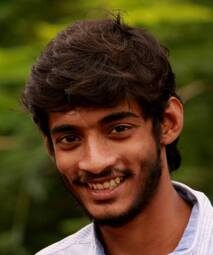
My research interests lie in understanding coral reef ecology, patterns of reef resource use by small-scale fishers and integrating community participation into local management efforts. I currently, work in the Andaman and Nicobar Islands where the fate of coral reefs, fisheries and local communities is deeply interlinked, and dependence on natural resources is high.
I have done my Masters in Marine Biology form the Pondicherry University, Port Blair campus in the Andamans. Since 2016, I have been involved in various marine research project in the islands and few in mainland India. At IISc, I am part of the MIST project, an interdisciplinary collaboration to improve understanding of the various physical, chemical and biological process in different marine ecosystems of the Andamans.
Shawn Dsouza 2017 - 2020
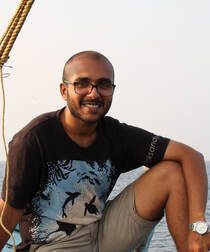
I completed my Masters in Biodiversity from Pune University in May 2017. For my Master’s dissertation, I studied the effects of habitat modification and disturbance on butterfly communities in the Nothern Western Ghats.
Over the past three years, I have been studying the effects of fisheries interactions on resource use by sea snakes on the west coast of India. I used a combination of stable isotope ecology and fisheries dependent methods to characterize sea snake diet and distribution and the distribution of fishing intensity in nearshore waters in a human-dominated seascape.
My research interest revolves around human interactions with ecosystems, their effects on fauna and managing these effects to ensure optimal outcomes for both the conservation of these ecosystems and the people who depend on those ecosystems.
Chetan Rao 2014 - 2020
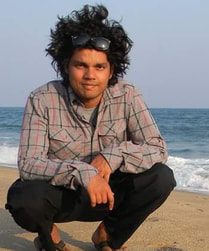
Sea snakes are a highly specialised group of organisms which evolved from terrestrial venomous elapid snakes. There are over 70 species found mostly in the Indian Ocean, accounting for over 86% of the marine reptile fauna of the world and are often caught as bycatch and commercial purposes in many parts of their range. Little research has gone into understanding the prolonged effect of anthropogenic pressures such as trawl fishing, coastal development and pollution, climate change on their ecology and populations. I study ecology of sea snakes in crowded human seascapes of Sindhudurg district, Maharashtra.
I completed my Masters from the Wildlife Institute of India in 2011. I have worked on various research projects in Karnataka and the Andaman Nicobar Islands on ecology of reptiles. I joined Dakshin Foundation in 2013 as a research associate and field coordinator monitoring nesting biology of sea turtles in Rushikulya, Orissa. I then started the sea snake ecology project in December 2015. When I am not looking out for sea snakes, I keep myself occupied with some sketching, reading or playing the drums.
Trisha Gupta 2017 - 2020
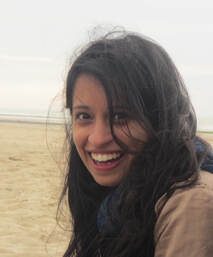
I have been fascinated by the ocean from a very young age, and always looked for any excuse to be by the water. I completed my master’s in marine biology from the University of Ghent in 2016. I studied Lesser Black-backed Gull chicks for my dissertation, looking at the effect of anthropogenic stressors on their development.
I have been working with Dakshin Foundation since early 2017, working on bycatch of sea snakes from fishing vessels at Malvan, Maharashtra. Building up on this project, I started working on different types and aspects of fisheries bycatch. My study is currently focused on understanding the characteristics and drivers of elasmobranch (shark and ray) fisheries. I’m interested in using a multi-disciplinary approach that combines ecology and socio-economics for the better management of fisheries and conservation of marine ecosystems.
Mohit Mudliar 2019 - 2020
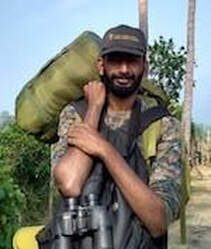
Chennai beaches introduced me to sea turtles as I started volunteering with SSTCN during my Bachelor’s degree. A serious interest in sea turtles started during my Master’s programme at Wildlife Institute of India, and I ended up doing my dissertation on olive ridley sea turtles in 2019. I looked at their stable isotopes to understand their foraging and studied habitat characteristics of their mass nesting ground for my dissertation. I joined Dakshin right after my Master’s to work as part of the long-term sea turtle monitoring programme at Rushikulya. I continue my stable isotope work along with the population assessment and data collection for the sea turtle programme.
Currently, my research interest includes stable isotope ecology, evolution and marine ecology. Other than science, I am interested in bikes, long treks and NFAK qawwali.
Ridhi Chandarana 2015 - 2018
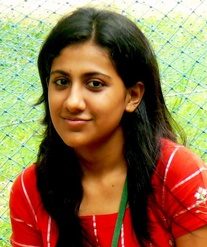
In Kartik’s lab, I worked on a study that explored the potential of tourism as an alternate livelihood for fishers in Rushikulya, Odisha and to aid in the conservation of the olive ridley sea turtle. Conservation decisions, at most times, only take ecological factors and the life history of the species into consideration. This study went one step further by looking into the larger political landscape and perceptions and opinions of the communities living alongside the turtles in Rushikulya. It was an effort to ensure representation and involvement of the different stakeholders, especially the local fishers whose voices are many times unheard.
My current research interest is in exploring how species are adapting to rapidly changing times. Urbanization, in particular, is generating novel stressors resulting in a plethora of strategies by different species to cope with these stressors. Besides work, I love reading. I am a diehard fan of the Lord of the Rings series and Tolkien’s world is my favourite escape spot. I enjoy playing board games and Ultimate Frisbee, both of which I can’t get enough of.
Alissa Barnes 2015 - 2018
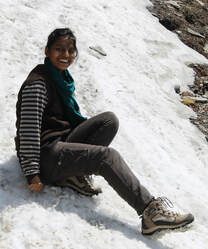
I worked with Dakshin Foundation as a Project Assistant on the ‘Long term monitoring of olive ridley turtles in Rushikulya’. Ridleys in Rushikulya aggregate every February or March to lay their eggs – a phenomena called arribada, In order to understand nesting patterns and offshore congregations, this project was initiated in 2008 and has been going on till date. My work involved offshore monitoring of olive ridley congregations, night shore walks to estimate nesting turtle numbers, beach profiling and mapping, nest relocation and hatchery maintenance.
Before joining the turtle project I worked on shark fisheries in Porbandar, Gujarat. this was a preliminary study to know the different species of sharks that are landed and other demographics and morphometrics of commercially important species. I am interested in community structure and how anthropogenic factors affect and alter these structures and behavioral ecology.
Akash Verma 2013 - 2014
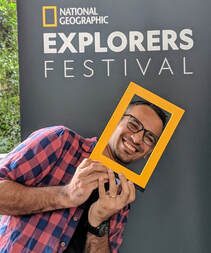
Immediately after my Masters in Environmental Studies, I joined the turtle team as a Research Assistant in 2013. I processed samples of preserved olive ridley hatchlings to determine the sex-ratio as part of a long-term study assessing the impact of climate change on the population structure of marine turtles. Later, I worked on a MoEFCC funded study which analysed intertidal benthic communities along the mainland coast of India to understand macro-scale distribution patterns.
I am now pursuing my PhD from the Applied Plant Ecology Lab at the Department of Biological Sciences, National University of Singapore. My research focuses on forest change across the Himalayas using a mixture of remote sensing and field methods. I am interested in expanding our understanding of the society-forest system in the mountains with an aim to developing evidence-based policy solutions for sustainable development. In the long term, I hope to achieve a balance between my research interests and my passion for teaching.
Meenakshi Poti 2012 - 2016
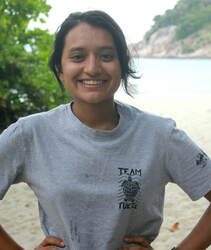
Fresh out of high school in 2012, I walked into Kartik’s lab as an intern to assist in a study related to green turtle foraging ecology. After that, I helped with various marine and terrestrial projects in CES. In early 2016, I worked with Dakshin Foundation to study green turtle-seagrass interactions in the Lakshadweep archipelago. The field and lab work involved estimating green turtle density, mapping seagrass and the micro-histological analysis of green turtle faecal matter to study their dietary preferences.
I completed my TROPIMUNDO Masters’ dissertation studying sea turtle egg consumption and conservation in Malaysia. With interests in social ecology, my current PhD work focuses on conflicts between conservation and development in small islands. Much of my research is focused on the Andaman Islands. I am affiliated to the Université Libre de Bruxelles (ULB), Vrije Universiteit Brussel (VUB) – Belgium and Dakshin Foundation – India. I enjoy communicating science through vibrant art and storytelling.
Nupur Kale 2012 - 2019
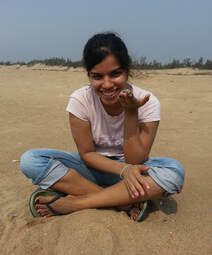
My main research interests are sea turtle biology, conservation and community based conservation. Since completing my Master’s from University of Kent, I have worked on population assessment and hatchling sex determination of the mass nesting olive ridleys in Odisha (2012-15) and sea turtle-based ecotourism in Maharashtra (2015). In the past, I have also worked on short term sea turtle projects in Sri Lanka and Costa Rica.
More recently, I studied the changes in abundance and the diet of green sea turtles in the Lakshadweep islands. Currently, I am working as a Project Associate at the Wildlife Conservation Society-India.
Nitul Kumar Gogoi 2012 - 2014
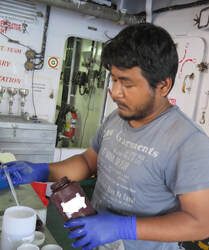
At CES, I worked on a project on macro-scale patterns in species distribution of intertidal soft shore benthic communities along the mainland coast of India. My primary responsibilities were pre and post monsoon collection and preservation of macro-fauna from the intertidal region for preservation & identification, sediment samples for granulometric analysis, water parameter analysis and beach profiling along the Indian coastline.
I am currently working as an associate at ‘National Centre for Sustainable Coastal Management’. I am primarily involved writing and reviewing environmental & social impact assessment plans for various national and state level projects under the Ministry of Environment, Forest and Climate Change. As a part of the Coastal and Marine Resources Division, I go for periodic short term field surveys and long duration deep water research cruises.
Thinesh T 2012 - 2013
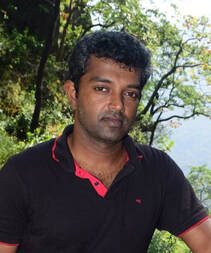
I worked on a project on the distribution pattern of Intertidal soft shore macrobenthic communities along the mainland coast of India. The study aimed to identify factors that drive species composition and distribution to prioritize conservation sites, and to identify indicator species for both natural and anthropogenic disturbances.
At present, I focus on the complex relationship between corals and their algal symbionts to understand how corals and their symbionts acclimate and adapt to the increasing temperatures. I am broadly interested in coral conservation with interests in restoration, reproduction, and genomics.
Amrit Kumar Mishra 2011 - 2012
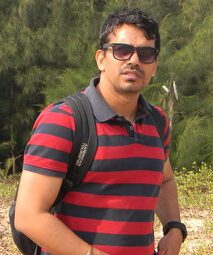
As a research assistant, my duties included collection of biological samples from olive ridley turtles along with physical parameters from the nesting site. Laboratory work included histological work for sex determination and use of molecular biology techniques for understanding the impacts of anthropogenic stressors and climate change.
I was then selected for the Erasmus Mundus PhD program at the University of Plymouth, UK. During my PhD, I worked on the effects of global change on coastal seagrass ecosystems of Mediterranean Sea from 2013-2017. I am currently working on the effects of various anthropogenic disturbance on the coastal ecosystems on the east coast of India. I am interested in understanding how these anthropogenic disturbances influence the population dynamics, carbon sequestration, bioindicator potential and ecological connectivity of coastal ecosystems.I use seagrass, saltmarsh and sand dune plants as models to answer my questions.
Ema Fatima 2010 - 2014
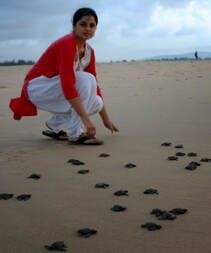
Born and raised in landlocked places for most of my school days, my affair with marine has been quite recent. I joined Kartik’s Lab in 2010 for my Master’s dissertation, and then worked as research assistant. In the early years, I spent months in the lab attempting to get a perfect cross section of sea turtle gonads or acing sea turtle DNA fragments on a gel. The rest of the time was spent looking after the field station, going for turtle walks and bonding with field assistants. In fact, during the nesting season, a lot of my time was anxiously spent on trains and buses, travelling between Bangalore and Odisha, desperately attempting to make it to my first mass nesting.
Later, I worked as coordinator for national Turtle Action Group (TAG) for Dakshin Foundation. I traveled to several nesting beaches along the west coast of India, training local communities to collect turtle nesting data. After working for WWF for several years on sea turtles and sharks, I am now moving away from a species focus to area based conservation. My interest lies in using MPAs/MSPs as tools for the conservation of critical habitats and vulnerable species, with a focus on international ocean governance.
Terenia Berlie 2007 - 2011
My main contribution to the olive ridley project was to coordinate the compilation of data on sea turtles between non-profit organisations in the country that monitored them. Apart from this, I helped with redesigning manuals on turtles, uploaded content on the sea turtle website, organised a workshop in Orissa for the Turtle Action Group and was part of the organising team for the International Sea Turtle Symposium held in Goa. I am currently helping turn her parents’ backyard into a more productive one.
I was then selected for the Erasmus Mundus PhD program at the University of Plymouth, UK. During my PhD, I worked on the effects of global change on coastal seagrass ecosystems of Mediterranean Sea from 2013-2017. I am currently working on the effects of various anthropogenic disturbance on the coastal ecosystems on the east coast of India. I am interested in understanding how these anthropogenic disturbances influence the population dynamics, carbon sequestration, bioindicator potential and ecological connectivity of coastal ecosystems.I use seagrass, saltmarsh and sand dune plants as models to answer my questions.
- Mugdha Kulkarni (marine turtle biology), Project Assistant, 2014 -2015.
- Smrutica Jeetendranath (marine turtle conservation), Project Coordinator, 2014.
- Sajan John (marine biology), Project Assistant, 2013-2014.
- Rucha Karkarey (marine biology), Project Assistant, 2010-2011.
- Divya Karnad (marine turtles), Project Assistant, 2008-2009.